

ACS WA 2026 Tech Summit - Intern Poster Showcase - Poster Preparation Guidelines
Consider the following guidelines when preparing your poster for the ACS WA Tech Summit 2026 Intern Poster Showcase.

Structure and Format
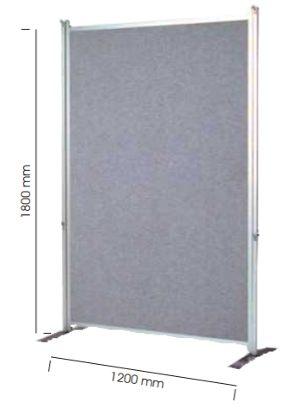
Posters should be A0 (841 x 1189mm) in size and in portrait format.
Your poster will be displayed on one side of a double-sided poster board.
Another poster will be displayed by another intern on the other side.
It is recommended that you use software like Microsoft PowerPoint to develop your poster
Use a large font for the titles given at the top of the poster. Titles should show the internship title, your name, the internship sponsor, and your academic institution at the time of the internship.
The poster should be readable from several meters away.
Strike a good balance between graphics, plots, charts, and text.
Be careful that your poster is not too wordy.
If you use a printing service such as that offered by a retail office supply store or similar, make sure you print your poster well in advance of the conference. While some printing services will print on demand while you wait, not all do so. Plan ahead!
Section headings are not prescribed, but you should be mindful of the items listed below.
It is your responsibility to ensure that your poster does not contain company confidential information, as your poster will be displayed publicly at the ACS WA Tech Summit 2026.
Be sure to acknowledge supervisors and sponsors!
Central Message
Be clear on the central message you wish to convey in your poster. To a great extent, your central message should consider the following:
- How did the internship prepare you for professional practice as an emerging ICT professional?
What technical, business and professional skills did the internship enable you to practice, develop, or refine?
How did the internship contribute to your work readiness above and beyond the skills and knowledge gained through your formal academic coursework?
What job and career outcomes are a direct result of your internship experience that will be of value to you in your career, and of benefit to your current or future employers?
Self-Assessment of Skills and Abilities
You may wish to conduct a skill self-assessment of your overall skills and the extent to which the internship enhanced these when planning your poster:
How did the internship enhance the skills required for your intended career role? You may wish to consider the following:
https://www.careersfoundation.com.au/
Using the Skills Framework for the Information Age (SFIA) is not a requirement for the poster. However, if you are familiar with SFIA consider using it to conduct your skill inventory. See SFIA version 9:
https://sfia-online.org/en/sfia-9/skills/all-skills-a-z
The levels or autonomy and responsibility at which SFIA skills are practiced can be displayed visually or in a tabular format. If you are an ACS member, consider using the mySFIA tool on the member dashboard to conduct your SFIA self-assessment. You can then use the resulting graphics together with descriptive text to describe your technical skills. See:
https://www.facebook.com/watch/?v=618002929156155
Evidence
Provide evidence to demonstrate the impact of your internship. Use objective data as evidence if this is available.
Use appropriate plots or graphics to visually communicate the data and complement the narrative associated with the outcomes and impact of your internship role.
Consider the following hypothetical scenario:
You have been assigned to work on the help desk in your internship role.
Your internship sponsor has noted that customer satisfaction
associated with the help desk could be improved. Your internship tasked
you with designing a new help-desk process based on data contained in
customer satisfaction surveys and your understanding of internal
communication and documentation.
In this hypothetical scenario, you might choose to include the following on your poster:
Aggregated objective data from customer satisfaction surveys, presented in a tabular format.
Representative open-ended customer quotes from the customer satisfaction surveys or interviews with actual customers.
A graphical representation of the original help desk process.
A graphical representation of a new help desk process that you designed and helped to implement.
Plots showing the change in customer satisfaction over the duration of your internship.
A list of recommendations you made for consideration by management.
A short critical reflection that explains the plots, graphics, and tables, and that provides context.
You might consider using a critical reflection framework such as STAR-L or DIEP to inform writing your critical reflection. If you were taught a different framework in your academic studies, you should use the one with which you are most familiar.
Applying the STAR-L framework to the hypothetical scenario might result in the following:
Situation - In my internship I was tasked with improving help-desk customer satisfaction.
Action - I analysed 5 years of customer satisfaction survey data and interviewed real customers to understand the cause of customer dissatisfaction. I also interviewed internal colleagues in different departments. Customer help-desk dissatisfaction was largely seen to be the result of internal communication barriers, out-of-date documentation, and customers who were not kept informed of the status of their issues. Based on this, I designed, documented, and assisted with the implementation of a new help-desk process that was trialed during my internship. I also made a set of recommendations for further consideration by management.
Result – The new process resulted in a 15% improvement in overall customer satisfaction.
Lesson Learned - I learned the importance of good documentation, and well-defined roles and processes with metrics to track outcomes against goals. Moreover, I saw firsthand that teamwork and good public-facing communication are essential components of customer satisfaction. I’m proud that I was able to make a measurable contribution in my internship that led to improved customer satisfaction.
References
ACS Foundation, STEM Career Wheel, https://research.qut.edu.au/eportfolio/students-alumni/reflective-practises-writing-make-a-start-and-maintain-the-momentum/
QUT, The Australian e-Portfolio Program, Reflective Writing Practice, https://research.qut.edu.au/eportfolio/students-alumni/reflective-practises-writing-make-a-start-and-maintain-the-momentum/
RMIT, How to use DIEP (Describe Interpret Evaluate Plan), https://learninglab.rmit.edu.au/assessments/reflective-writing/how-use-diep/
SFIA, SFIA Version 9, https://sfia-online.org/en/sfia-9/skills/all-skills-a-z