

NAIDOC Week 2026: Reflecting on Australia's Digital Divide
This year’s NAIDOC Week is themed “50 Years of Deadly”, celebrating the pioneers, Elders, artists, and communities who have shaped the movement. The theme honours the past while looking forward, emphasising the importance of embedding culture and identity across all areas of life, including health, education, and technology.
The Digital Divide: A Persistent Challenge
In 2023, Information Age reported that “Australians living in remote First Nations communities are among the most digitally excluded Australians – far more than their non-First Nations counterparts.”
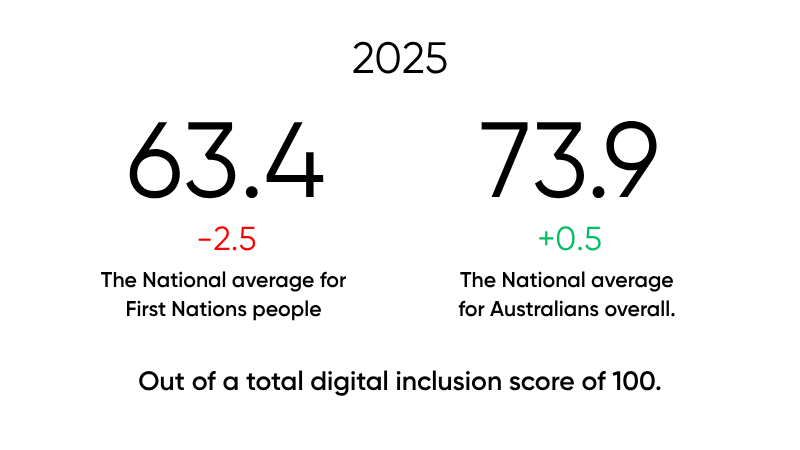
Recent findings from the Australian Digital Inclusion Index (ADII) 2025 show that progress to support remote First Nations communities remains slow. The digital inclusion gap has widened to 10.5 points in recent years, with remoteness exacerbating the disparity.

Progress and Positive Developments
Despite these challenges, there are signs of improvement. Mapping the Digital Gap, a survey partner for the ADII, reported an 8.7-point increase in digital ability among First Nations people in very remote communities, rising from 45.8 in 2023 to 54.5 in 2025. This suggests that targeted support and skill development are making a difference, enabling greater participation in online spaces for work, health, and essential services.
Barriers to Inclusion
Device compatibility, while 93.3% of Australians own a smartphone, these devices often lack the capability for tasks better suited to laptops or desktops, such as work or study.
Cost remains a concern, with 19.4% of Australians compromising on internet speed or data allowance, and 15.9% experiencing connectivity issues—rates that nearly double in very remote areas.
Affordable, high-quality digital infrastructure is still a pressing need, especially for regional and remote communities.
Initiatives Closing the Gap
Efforts to address the digital divide are underway:
- StarLink’s low Earth orbit (LEO) satellite services are being adopted in remote communities, improving connectivity during adverse weather conditions. Read more from The Conversation.
- Free Wi-Fi initiatives, both privately and government funded, are rolling out across Australia, focusing on hard-to-reach locations. Read more at National Indigenous Times, or explore The Concordia Initiative.
- Repurposed laptops are being distributed to children and First Nations communities, providing access to essential services like education, health, and banking. Donate an old device today with LiteHaus.
- Dedicated education efforts, such as the ACS led ICT Gateway to Industry Schools Program, targeted to those in regional or hard to reach areas bring much needed visibility and technical training to help establish digital skills.
Looking Forward
As Australia celebrates NAIDOC Week, the focus remains on closing the digital divide and ensuring equitable access to technology for all. Continued investment in infrastructure, devices, and digital skills is essential to empower First Nations Australians and build a more inclusive digital future.
Learn more about the Australian Digital Inclusion Index and check out their First Nations' Dashboard, a showcase of data designed to understand the barriers to digital inclusion for all First Nations Australians in urban, regional and remote areas, and how these results compare to the rest of Australia.