

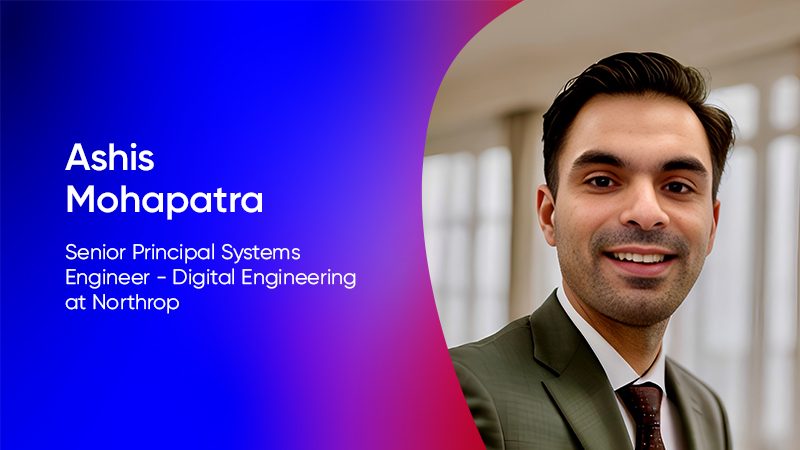
Conversation with Ashis Mohapatra, Senior Principal Systems Engineer - Digital Engineering at Northrop
Improve your professional standing through ACS Certification.
As governments, businesses and the education sector become increasingly reliant upon technology, you face a new and fundamental challenge. A challenge that goes beyond keeping technical skills and knowledge up-to-date and demands that you prove your experience, leadership and professional capability in a way that employers, clients and peers recognise and trust.
That's where ACS Certification comes in.
ACS Certified Professional (CP) and Certified Technologist (CT) are independent, vendor-neutral professional certifications for technology professionals. Rather than testing what you've recently learned, ACS Certification recognises the capability, experience and professional practice you've already demonstrated throughout your career.
The ACS Certification assessment is based on the internationally recognised SFIA (Skills Framework for the Information Age) benchmark. It acknowledges not only technical expertise, but also professional judgement, responsibility and a commitment to ongoing development.
For many professionals, the impact goes well beyond adding post-nominals after their name.
Certification provides independent recognition of years of experience, increases confidence, strengthens professional credibility and helps technology professionals stand out as trusted practitioners and leaders. It transforms experience into recognised professional standing.
The following conversation with ACS member Ashis Mohapatra, Senior Principal Systems Engineer - Digital Engineering at Northrop, shows what that transformation looks like in practice.
Before you decided to pursue ACS Certification, where were you in your career, and what were you feeling?
Ashis Mohapatra: Before pursuing certification, I worked as a systems engineer across a range of industries, including rail, mining, automotive, and defence. Over time, my role evolved from being hands-on with integration and verification to contributing more across the full product lifecycle, from requirements and modelling through to validation and deployment. That shift made me more aware of the need to formalise my experience and demonstrate professional accountability.
What motivated you to take action and invest in ACS Certification?
Ashis Mohapatra: The main driver was timing. I had reached a point where I was not just delivering within my role but influencing how engineering was done, particularly around systems engineering practices and digital engineering approaches. I had already completed the Chartered pathway with Engineers Australia, and pursuing ACS Certification felt like a natural extension to recognise the digital and technology side of my work.
What action did you take or opportunity did you grasp?
Ashis Mohapatra: I applied to become an ACS Certified Professional (MACS CP) with the ACS. Given my work sits at the intersection of engineering and digital systems, especially around MBSE, toolchains, and data integration, it felt like the right fit.
The process itself was quite reflective. It involved stepping back and articulating my experience across different roles, domains, and lifecycle phases. One of the challenges was shifting from describing what I have done to clearly demonstrating impact, judgment, and responsibility, which we don’t always consciously document in day-to-day work.
What was the outcome, what did you achieve, and how did you feel?
Ashis Mohapatra: Since becoming certified, I have noticed a subtle but important shift in confidence, especially when working across multidisciplinary teams and engaging with stakeholders beyond engineering. Combined with my Chartered status, it has strengthened my ability to contribute to digital engineering capability, governance, and strategy, particularly in defence and space-related programs.
What advice would you share?
Ashis Mohapatra: I would say do not overthink it. If you have been working across different aspects of engineering or technology and taking ownership of outcomes, you are probably more ready than you think. The process itself is valuable because it forces you to reflect on your journey and how you contribute beyond just your immediate tasks.
Build your professional confidence with ACS Certification.
What stands out most in Ashis’ story is how ACS Certification changed the way he saw himself.
Certification gave Ashis greater confidence. Confidence to lead. Confidence to contribute beyond his technical expertise. Confidence to engage with senior leaders, colleagues and clients, knowing his capability had been independently recognised.
And that is the real value of ACS Certification. It doesn't change what you've achieved. It validates it. It doesn't replace experience. It gives that experience the professional standing it deserves. And it doesn't mark the end of learning. It inspires the next stage of growth.
For every technology professional, there comes a moment when a career becomes more than a series of roles, projects or job titles. It becomes a profession built on expertise, judgement, responsibility and continuous development.
ACS Certification marks that moment. Because ultimately, ACS Certification is not about proving what you know. It's about recognising who you've become.
Many ACS members are eligible for ACS Certification without realising it. If you would like to consider becoming either a Certified Professional or Certified Technologist, speak to your local ACS branch manager or submit an application.
ACS Certification is exclusive to ACS members. To become an ACS member, visit the Join ACS page.