

Inclusion, innovation and progress
Today, technology touches every part of society, from how governments protect borders and businesses manage transformation to how we all work, learn and keep in touch with friends and family.
But it is often easy to forget that people are behind every app, system and platform. And the people who design technology ultimately shape the world it creates.
For the tech sector to truly innovate, it must reflect the diversity of the communities it serves. Different perspectives don’t just strengthen culture - they lead to better ideas, better decisions and more inclusive outcomes.
In this article, we hear from ACS members with a wide range of backgrounds, identities and career journeys. Their paths into technology are not the same, and neither are their experiences within it. Yet they share a common belief: that the future of technology depends on building a profession where more people can contribute, belong and lead.
The realities of entering the profession
Several members reflected on moments when they had to prove their technical credibility more than once. For some, it was being mistaken for the least technical person in the room. For others, it was navigating assumptions about leadership potential or experience.
“As a female leader in technical roles, I still encounter assumptions that I do not have deep technical experience when I walk into a room. That means demonstrating capability repeatedly, regardless of role or track record.” (Sarah-Louise MacDonald, CEO, TBF Digital.)
“For those who don’t know, I am a wheelchair user, a woman in tech, and of Chinese heritage. On top of that, I didn’t study an IT, computer science, or even a cybersecurity degree. There have been many instances where managers or vendors have made assumptions and remarks about how ‘untechnical’ I was and how I wouldn’t be able to have a successful career in technology because of it. Then, on top of that, you add a physical disability. I remember a time when my whole team was invited and provided tickets to attend a cybersecurity conference, and I was singled out. When I asked my people leader, he simply said it was because it was a very technical conference, and it wouldn’t be of value for me to go. I have since attended that conference and even presented there, which I am very proud of. (Daisy Wong, Head of Security Awareness, Medibank.)
The hidden barriers that still shape careers
Many contributors emphasised that the most significant barriers are not always visible in diversity statistics.
“When I encountered bias, whether it was subtle doubt, being questioned more than others, or people making assumptions based on my gender, cultural background or age, I learned not to internalise it. That does not mean those moments were easy. They could be frustrating, isolating and, at times, exhausting. But they also strengthened my resolve. What I came to understand is that bias does not always arrive loudly. Sometimes it shows up in who gets trusted first, who gets invited into decision-making, whose expertise is second-guessed, or who is expected to prove themselves over and over again. Those experiences shaped me, but they did not diminish me. If anything, they deepened my commitment to creating pathways where others do not have to spend so much energy fighting to be seen, heard and valued.” (Ruwangi Fernando, Chair, ACS Victoria Diversity & Inclusion Special Interest Group.)
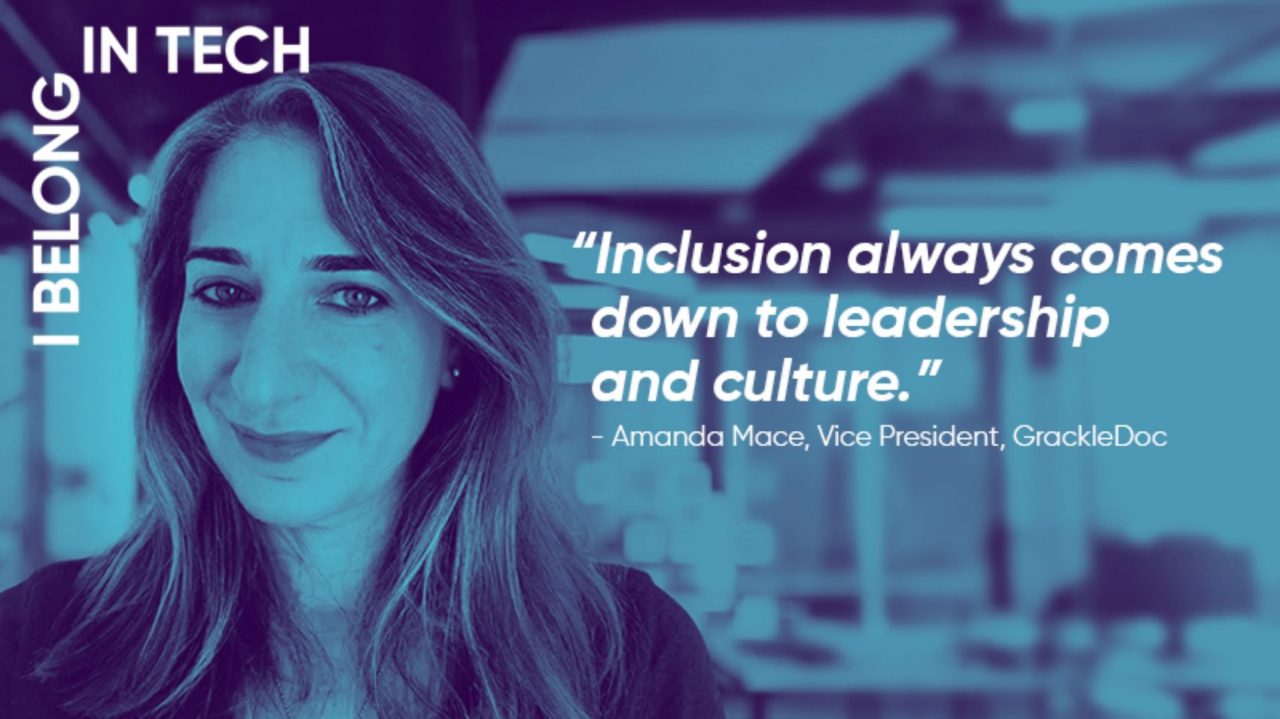
“One of the biggest issues remains the idea that accessibility is an add-on rather than a core part of quality. That mindset creates issues, not only with the digital asset itself but also negatively impacts the building of inclusive cultures and environments in the workplace.” (Amanda Mace, Vice President, Australasia, GrackleDocs.)
Why diversity improves technology
In several stories, diversity was not simply a value but a practical advantage. Teams with different perspectives identified risks earlier, designed more accessible products and challenged assumptions that others had overlooked.
“A growing body of research shows that neurodiverse teams outperform traditional teams in key areas of IT delivery. Deloitte’s analysis of neurodiversity programs found that organisations reported productivity improvements, quality gains and increased innovation when neurodivergent technologists were integrated into well-supported teams1.” (Dr Ivonne Ranisch, CEO and Managing Director, auticon Australia.)
“Inclusion expands the perspective in the room. When we consider a wider range of users and experiences, we design better products. Accessibility is a great example of innovation. Many features originally designed for accessibility, like captions and voice interfaces, ultimately benefit everyone. Inclusion pushes us to think more creatively about how technology works in the real world.” (Amanda Mace, Vice President, Australasia, GrackleDocs.)
“When inclusion is done well, it improves creativity and performance because people bring different perspectives, and that requires us to acknowledge our own unconscious biases. The discomfort that comes from being challenged is actually where growth happens; it leads to better ideas, stronger decisions and more innovative outcomes. In my experience, teams that embrace this not only perform better, but they also enjoy the work more too.” (Annie Ryan, BEC Chair, ACS.)
The progress the industry has made
Despite the challenges, contributors are clear: the technology sector is changing.
“I work with Ronald McDonald House Charities Australia, and I know if I don't have a diverse short list, the IT manager there doesn't want it. How cool is that! The IT manager is female, and she wants every colour, every age, every background, she wants someone on the spectrum, off the spectrum with the rainbow attached, everything. She knows that diversity brings great teamwork and great outcomes for businesses, and she won’t even start looking to fill a role without considering diversity. For a small organisation like a Ronald McDonald House Charities, which is a fundraising business, this is critical to connecting with sponsors, stakeholders and people in need of a little help.” (Dean Ellis, Director, Rec4Tech.)
“Inclusion, when done well, fundamentally changes the quality of thinking in a room.
In my own experience building technology and working on AI models, diverse teams have consistently produced stronger outcomes. When people bring different lived experiences, ways of thinking and perspectives to the table, the work becomes more rigorous, more creative and ultimately more relevant. It helps uncover blind spots earlier, challenge assumptions more effectively, and design solutions that are better suited to the real world. Inclusion also improves team performance by building trust. When people feel safe contributing without fear of being dismissed or overlooked, they participate more openly, collaborate more meaningfully, and are more willing to test ideas and challenge one another constructively. So in my experience, inclusion is not just about culture or fairness; both matter deeply. It is also a clear driver of excellence. The best innovation happens when different voices are not just present, but genuinely valued.” (Ruwangi Fernando, Chair, ACS Victoria Diversity & Inclusion Special Interest Group.)
Where progress must continue
We asked members what they would change if they had a magic wand.
“Another area where progress has been far too slow is the startup and investment ecosystem. Women-led companies, many of which are solving pressing societal challenges, still face greater barriers in attracting capital and scaling their ideas. That is not only an equity issue; it is an innovation issue. When the businesses tackling real-world problems are not backed at the level they deserve, we all lose. So while the language of inclusion has become more visible, the deeper shifts in money, power and opportunity have not moved fast enough. That is where the real test of progress lies.” (Ruwangi Fernando, Chair, ACS Victoria Diversity & Inclusion Special Interest Group.)
“I am still surprised how slowly the number of women choosing a career in technology is rising. At the same time, the technology sector is changing more rapidly than ever, with tech careers set to look very different to even a few years ago. To improve participation, we need to think differently about how we attract women — by making technology careers more visible and relevant earlier, showcasing a broader range of role models, and highlighting how emerging technologies intersect with policy, ethics and realworld problemsolving – aligned with the way the sector is evolving.” (Annie Ryan, BEC Chair, ACS.)
What leaders can do now
Inclusion, contributors say, is not created by statements alone. It is built through everyday decisions.
“Lead by example. Be a true role model. Don’t say one thing and do another.
It can be as simple as not organising all social events after work hours, as many people have family responsibilities. Another key thing is learning the art of asking. Don’t make assumptions. For example, don’t assume someone shouldn’t be invited to an interstate conference because they are a wheelchair user and it might be “too difficult.” Let people make their own decisions. I personally value autonomy and being able to choose for myself.” (Daisy Wong, Head of Security Awareness, Medibank.)
“Invest in skills and accountability. Upskill staff on embedding accessibility requirements into every stage, from procurement and maintenance of the digital product, and empower (internal or external) accessibility experts to influence decision-making. Inclusion happens through systems and culture, not statements.” (Amanda Mace, Vice President (Australasia), GrackleDocs.)
“To create a more neuro-inclusive workplace, organisations need to first focus on better communication. Better communication then leads to a stronger, more productive culture. When organisations implement structured communication, clearer processes and more predictable workflows to support neurodivergent employees, these adjustments benefit everyone. Organisations that have done this report that teams experience reduced ambiguity, more consistent documentation, better sprint planning and retrospectives and higher psychological safety. This is the bedrock of what high-performing cultures are built on.” (Dr Ivonne Ranisch, CEO and Managing Director, auticon Australia.)
Advice to the next generation
If there is one message members would send back to their younger selves, it is simple: you don’t need to fit the stereotype of a technologist to succeed in technology. In fact, the future of the profession may depend on those who don’t.
“I'm my own person. I think probably in the last five or maybe 10 years, I've realised that my differences, like who I am, and what my differences to other people are, are actually my superpower. They're my advantages.” (Dean Ellis, Director, Rec4Tech.)
“I would say, learn to advocate for yourself, because no one else will, and learn the art of asking for help. It doesn’t make you weak or a burden. We are all human, and we all deserve to be treated equally. I deserve a seat at the table, just like anyone else.” (Daisy Wong, Head of Security Awareness, Medibank.)
“Back yourself earlier. You do not need to have all the answers to contribute meaningfully. Focus on learning, stay curious, and take on challenges that feel slightly out of reach. Those experiences will shape your capability more than anything else.” (Sarah-Louise MacDonald, CEO, TBF Digital)
Conclusion
Together, their stories offer a powerful reminder that inclusive technology isn’t a separate conversation - it’s central to how the industry grows, evolves and delivers value for society.
If you’d like to share your experiences of inclusion and diversity in technology, join the conversation on LinkedIn.
To help further inclusivity across the tech sector, join ACS and be the difference.