

How to keep your technology skills current and stay relevant in the age of AI
ACS Digital Pulse 2026 paints a powerful picture of Australia’s tech sector. Contributing $142 billion to the economy, digital skills across all sectors are valued at an incredible $476 billion. The importance of Australia’s digital capability cannot be understated. AI already influences 70% of tech professionals’ time, yet just 7% of workers demonstrate advanced AI literacy.
ACS CEO, Dr Prins Ralston, summarises the challenge:
“As AI and digital tools embed themselves in every occupation, Australia will need the right skills and capabilities across the broader workforce so that workers, businesses and institutions can adopt new technologies confidently."
According to ACS Australia’s Digital Pulse 2026, technology workers report that AI is already augmenting existing tasks, automating parts of their work and creating new responsibilities. Almost three-quarters say AI has improved their productivity and supported their learning and development. Yet many also report increased complexity and work-related stress.
That tension captures the career challenge of the AI age. The technology creates opportunity, but it also keeps moving the boundary of what it means to be capable.
The answer is not to predict every tool that will matter. It is to treat career development as a continuous cycle: assess your capabilities, grow the ones that matter and seek credible recognition of your skills and experience.
What skills do technology professionals need in the age of AI?
Technology professionals need a combination of current technical expertise, AI literacy and the human capabilities required to apply technology well.
Technical depth still matters. Demand is growing in areas including AI, data and analytics, cybersecurity, cloud and digital infrastructure. ACS Digital Pulse 2026 found that the share of Australian job advertisements requiring AI skills rose from 0.02% in 2015 to 1.25% in 2025.
But technical knowledge alone is not enough. Employers increasingly need people who can judge when and how technology should be used, communicate its implications, solve ambiguous problems and take responsibility for the result. Creativity, critical thinking, communication, ethical judgement and adaptability are critical skills that turn technical potential into useful, trusted outcomes.
As AI manages more routine and time-consuming tasks, the professionals who can frame the right problem, interrogate an output, manage risk and exercise judgement become indispensable. In addition to possessing first-class technical skills, staying relevant means becoming more capable at the work that makes AI valuable, safe and accountable.
Will AI replace technology jobs or change them?
The current Australian evidence suggests AI is changing tasks and skill requirements more visibly than it is removing entire occupations.
ACS Digital Pulse 2026 found limited evidence so far of an AI-driven, economy-wide fall in Australian hiring demand. While conditions have become more competitive in some areas, the report forecasts that Australia will need an additional 259,000 technology workers by 2035. Employment in the technology workforce is expected to grow at twice the rate of the workforce overall.
That does not mean every role is protected. Some tasks will be automated, roles will be redesigned, and new specialisations will emerge. Between 2020 and 2025, demand for roles such as AI Engineer and Generative AI Engineer increased sharply. Ethics and compliance roles also grew.
The practical lesson is to think in terms of tasks and capabilities, not job titles alone. Ask which parts of your work can be automated, which can be improved through AI, and which depend on human judgement, relationships or accountability. Then build towards the higher-value combination.
How can technology professionals identify their skills gaps?
Like any journey, you have to know where to start. And in terms of building capability, that means having an honest assessment against the work you do now and the work you want to do next.
Many professionals feel pressure to keep up but lack clarity about which skills will create progress. That can lead to costly trial and error: chasing fashionable tools, taking disconnected courses or developing expertise that is difficult to explain to an employer.
A structured capability framework can replace that guesswork with a common language. The internationally recognised Skills Framework for the Information Age (SFIA), for example, describes professional skills across different levels of responsibility. It considers not only knowledge, but also professional attributes such as autonomy, influence, complexity and business capability.
ACS mySFIA is a skills assessment and development platform that enables tech professionals to assess their skills against their existing or desired role and identify areas for development. The assessment provides unique visibility and direction, creating a profile of capabilities and recommending a development plan to support career growth.
ACS members who possess a SFIA skills profile understand their contribution to their team and organisation. They know what they can do confidently and consistently today. What’s more. They also know what capabilities they need to learn or improve to move to the next level of responsibility.
In a fast-moving tech profession, a SFIA skills profile is not a verdict on your career. Rather, it is a real-time map for staying relevant and advancing your career.
What is the best way to upskill for an AI-enabled career?
The best way to upskill is to follow a development pathway that is targeted to your career and your ambitions, connected to trusted learning and reinforced through professional practice and community.
ACS mySFIA provides a practical starting point. Rather than choosing courses based on what is fashionable or most heavily promoted, technology professionals can use mySFIA to assess their current capabilities against SFIA, the world’s leading skills framework, compare their profile with a current or desired role, and identify the skills that will make the greatest difference to their progression.
That assessment can then lead directly to development. Through mySFIA’s integration with Skillsoft, ACS members can move seamlessly from an identified skills gap to relevant on-demand learning across technical, business and interpersonal capabilities. This creates a more coherent journey: understand where you are, decide where you want to go and focus your learning on what will help you get there.
Courses alone, however, do not create professional capability. Learning becomes valuable when it is tested through real work, informed by other practitioners and kept current as technology changes. ACS membership supports that wider process through professional development events, industry insights, learning and development opportunities, and access to a community of technology professionals exploring AI and emerging technologies. That community can expose members to practical experience, different perspectives and opportunities that are difficult to gain through self-directed learning alone.
The final step is application. If you are developing AI literacy, use AI to improve a genuine workflow, evaluate the quality of its output, document the risks and measure the result. If you are building leadership capability, practise explaining an AI-enabled decision in business terms or guiding a team through adoption. Keep evidence of the outcomes, feedback and decisions involved. In an AI-enabled career, the aim is not simply to know more. It is to turn relevant learning into demonstrable capability, and to repeat that process throughout your career.
How can technology professionals prove their skills to employers?
Capability creates value, but credible recognition makes that value easier for others to see and trust.
Self-described expertise can be difficult to compare, particularly when professionals enter technology through diverse combinations of education, migration, career change, industry training and experience. ACS Digital Pulse 2026 argues that professionalisation bridges this gap through consistent standards for capability, ethics, accreditation and ongoing development.
The report found that 78% of surveyed technology workers had completed some form of accredited training, including 48% who had undertaken SFIA-accredited assessments. Its analysis also found an association between SFIA-accredited training and a 7.3% wage premium, about $8,600 a year for the average technology worker surveyed.
ACS Certification provides technology-neutral recognition through the Certified Technologist and Certified Professional designations. Unlike a vendor credential tied to a product, it considers transferable skills, professional practice and responsibility. It also carries commitments to ethics and continuing professional development.
Recognition is not about collecting badges for their own sake. It is about creating a portable, trusted account of capability, one that can support career progression, mobility and confidence across employers and career transitions.
What is the Assess, Grow and Recognise approach?
Assess, Grow and Recognise is a practical process for maintaining professional relevance that we recommend to ACS members.
Assess: Benchmark your current capabilities, understand how you stack up against your current role and identify areas for development.
Grow: Build those capabilities through personalised, targeted learning on ACS Skillsoft, which is integrated with mySFIA.
Recognise: Validate and communicate what you can do with ACS SFIA Digital Badges, verifiable credentials that provide evidence of professional practice.
The three stages reinforce one another. Assessment makes learning more focused. Learning creates growth. Recognition makes growth visible and establishes a new benchmark for your career development.
Assess, Grow and Recognise is an ACS process supported at each stage through mySFIA, Skillsoft, digital badges and ACS Certification. But the larger principle applies to every technology professional, whether or not they use those particular services: career development should be deliberate, connected and repeatable.
How often should technology professionals update their skills?
Skills development should be continuous, with a structured review at least every six to twelve months and whenever a role, technology or career goal changes.
That does not mean constantly abandoning one skill for another. Strong careers combine enduring foundations with selective renewal. Technical fundamentals, professional ethics, communication and problem-solving retain their value. Tools and platforms change more quickly. The task is to know which capabilities to deepen, which to refresh and which no longer deserve your attention.
ACS mySFIA can help. As your role evolves and you’re asked to take on new tasks, assess your skills against the new role, identify the gaps in your capabilities and commit to the development plan mySFIA recommends. This turns upskilling from an anxious reaction to change into a normal part of professional practice.
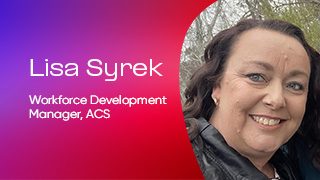
“(AI adoption) will require people with the skills to apply them, the judgement to question them and the professional standards to be accountable for their impact.”
Lisa Syrek, ACS Workforce Development Manager
The professionals who keep learning will shape what comes next.
AI is not reducing the importance of technology professionals. It is raising expectations of them.
Australia has a significant economic opportunity ahead. ACS Digital Pulse 2026 estimates that AI adoption could deliver $116 billion in economic benefit over the next decade. Unlocking that value will require more than access to powerful systems. It will require people with the skills to apply them, the judgement to question them and the professional standards to be accountable for their impact.
No individual can stay current with everything. Relevance comes from something more achievable: knowing your capabilities, choosing where to grow and ensuring your progress can be recognised and trusted.
AI changes the work. People who keep learning will shape what comes next.
Download ACS Digital Pulse 2026
This article highlights the importance of assessing and growing skills and capabilities in the age of AI as revealed in ACS Digital Pulse 2026.
The full report explores Australia's technology workforce in far greater depth, with detailed analysis of AI adoption, workforce demand, education pathways, productivity, economic contribution, digital inclusion and the skills that will shape the decade ahead.
Download the full report from the ACS Digital Pulse landing page and discover the evidence shaping Australia's digital future.